Revitalize Brain Health in 20 MinutesDeep TMS™Deep Transcranial Magnetic Stimulation

  • About Us

08/12/2025

The TV station focuses on the new generation of emotional therapy and launches an exclusive TV interview with Deep TMS (includes program content link)

share to:

facebook whatsapp
events

TV Coverage Focuses on Next-Generation Emotional Therapy
   

Special Feature on Deep TMS™ Deep Transcranial Magnetic Stimulation

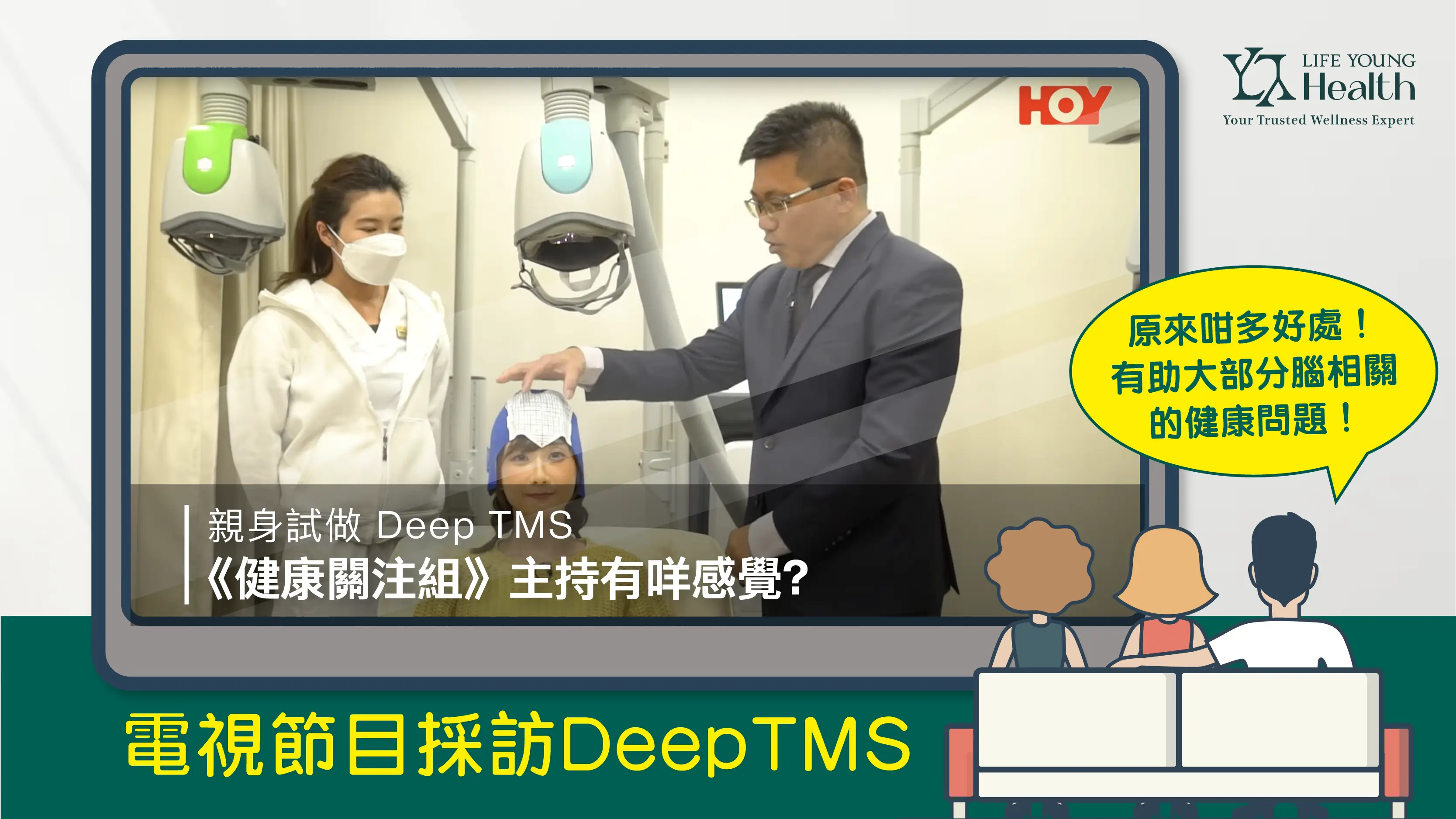
Emotional disorders are receiving increasing attention, but treatment is not always easy. Traditional methods mainly rely on medication and psychotherapy. The former raises concerns about side effects and dependency, while the latter requires long treatment periods and unpredictable costs, which can be discouraging. HOY TV‘s《Health Focus》 has also highlighted emotional disorders, noting that treatment is no longer limited to medication and psychotherapy—there is now a therapy called TMS (Transcranial Magnetic Stimulation). Program host Akina Choi visited the medical team at Life Young Health to personally experience the therapy and gain an in-depth understanding of its features and benefits!

Deep TMS — First in Hong Kong to Improve Brain Health


Host: What is the principle behind transcranial magnetic stimulation (TMS) therapy?

Doctor: The principle of TMS therapy is to use magnetic pulses to penetrate deep into the brain and stimulate neurons in the prefrontal cortex that control emotions. This aims to improve metabolism and activate cells. Neurons that previously struggled to regulate emotions can regain control, thereby alleviating symptoms. This allows patients to improve depression and other emotional disorders without taking medication.

Host: How does the Deep TMS therapy introduced by LIFE YOUNG Health differ from the previous generation of TMS?

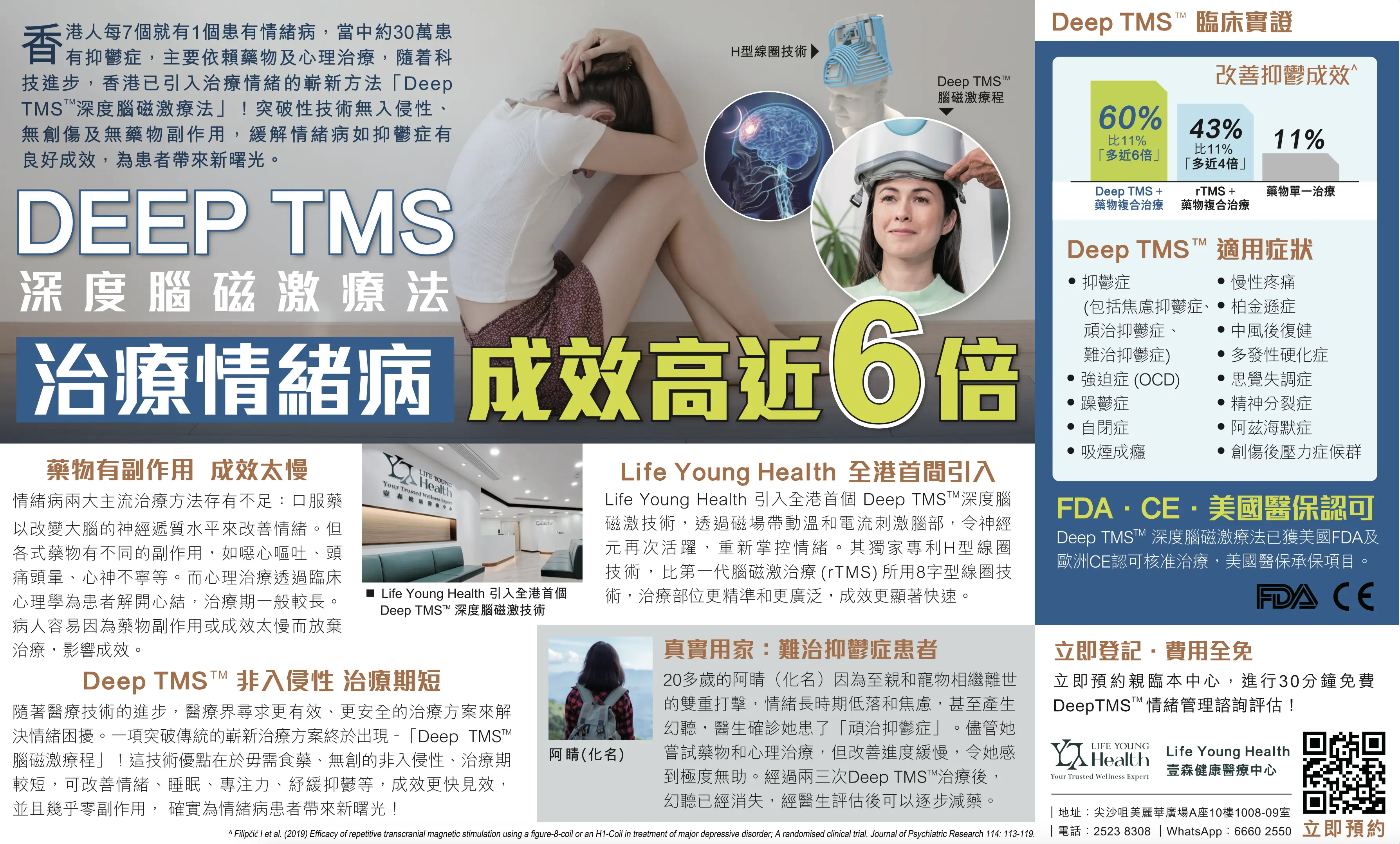
Doctor: The older TMS systems used a figure-eight coil. Its magnetic pulses do not penetrate as deeply, and the treatment coverage is relatively limited. As a result, it may not fully target the treatment area, making the effects less optimal.

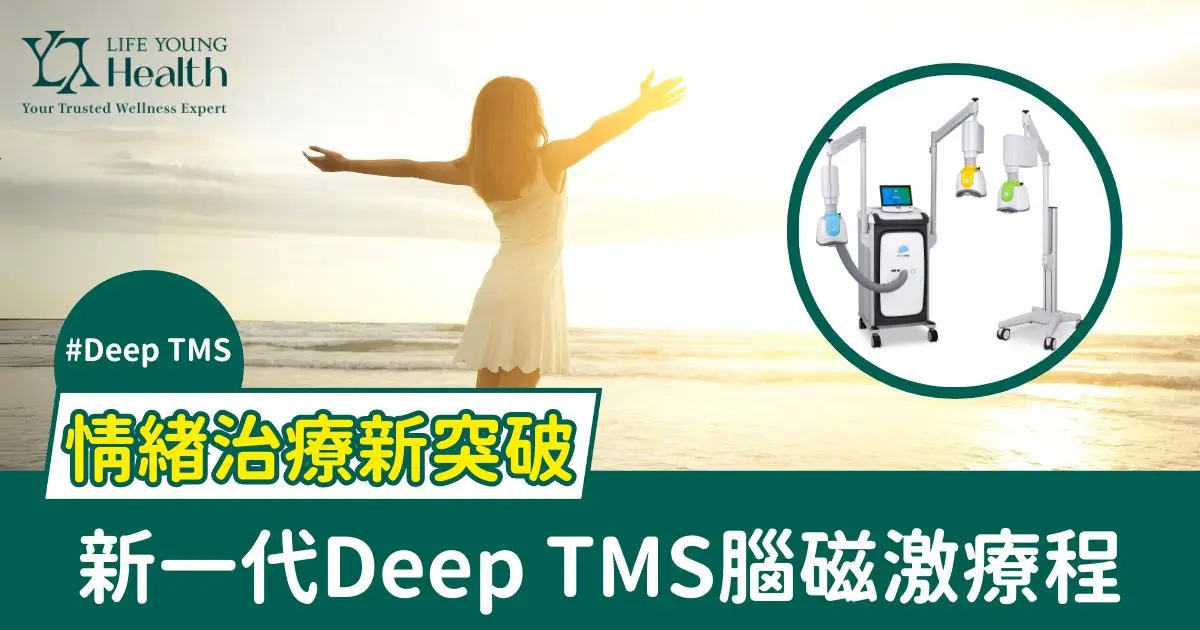
The new generation Deep TMS uses an H-coil, which penetrates deeper into the scalp—up to 3.5 cm—and provides broader and more precise coverage. It can target specific brain regions associated with different emotional disorders, such as depression, for more effective treatment.

In terms of effectiveness, Deep TMS therapy increases treatment success from 43% with the old TMS systems to 60%, delivering significantly better results.

Deep TMS for Improving Insomnia — Hosted by Akina Choi

Host ofHealth FocusPersonally Tried the Therapy—Helpful for Improving Insomnia

Host: Besides treating emotional issues, can it be used for other conditions?

Doctor: Yes. This device has many functions. It can help with anxiety, OCD, Alzheimer’s, stroke, chronic pain, Parkinson’s, autism, and more. It’s particularly helpful for patients with insomnia, as early stages of many emotional disorders are often associated with sleep problems. These issues should be addressed and treated promptly.

Host: Can Deep TMS be done even if someone doesn’t have an emotional disorder?

Doctor: Yes. Deep TMS has no drug-related side effects, so it’s not necessary to have a diagnosed emotional disorder to undergo treatment.

Host: There are three different colored helmets. What’s the difference?

Doctor: Each helmet has a different coil, targeting specific areas of the brain for different conditions. For example, the blue helmet targets anxiety and depression.

Host: Before the session, we put on a blue cap. What is it for?

Doctor: The cap has a coordinate system to help place the helmet more precisely on the head, making the treatment more effective. (During the trial session) In just two seconds, 18 pulses were delivered. How does it feel?

Can Improving Mood Start from the Gut?

For emotional issues, LIFE YOUNG Health not only provides Deep TMS therapy but also integrates nutritional therapy to offer patients a more comprehensive approach to improving mood. The program host also interviewed LIFE YOUNG Health nutritionist Natalie Hui.

Host: Why is nutritional therapy combined with Deep TMS?

Nutritionist: In our physiological system—such as immunity, digestion, hormones, and the autonomic nervous system—everything is interconnected, and the brain is just one part. We hope to address multiple aspects to provide patients with long-term health benefits.

Host: How does nutritional therapy help patients with emotional disorders?

Nutritionist: For patients with mild or short-term emotional discomfort, combining Deep TMS therapy with nutritional supplements can be very helpful. For example, improving gut microbiota can support brain function. Proper supplementation with probiotics can help alleviate depressive symptoms and provide anti-anxiety benefits.

Treating emotional disorders is not as straightforward as dealing with a cold, and patients need patience and strong support from family and friends during treatment. Fortunately, there are increasingly more new technologies available to treat emotional issues. So don’t lose hope—if you are experiencing emotional disorders or are interested in Deep TMS therapy, be sure to consult your family doctor or a qualified professional.

* * * * * 

Related Topics 


Can Probiotics Boost Your Mood? Gut Health Surprisingly Helps Fight Depression!

【New Breakthrough in Emotional Therapy】Next-Generation Deep TMS Treatment — Non-Invasive, Drug-Free, and Side-Effect Free


line

Other Articles

line