Revitalize Brain Health in 20 MinutesDeep TMS™Deep Transcranial Magnetic Stimulation

  • About Us

08/12/2025

The first hospital in Hong Kong to introduce Deep TMS technology to stimulate the cerebral cortex to treat mood disorders | Hong Kong 01

share to:

facebook whatsapp
events

Do you often feel anxious about life, with negative emotions lingering for a long time, making it hard to let go? Have activities that used to bring you joy gradually become dull and uninteresting? If so, these may be signs of underlying emotional issues. Statistics show that 61% of adults in Hong Kong are in a relatively poor mental health state, and one in seven Hongkongers experiences common mental health disorders, making it a widespread concern. When it comes to treating emotional disorders, people usually think of psychotherapy or medication. The emergence of TMS (Transcranial Magnetic Stimulation) technology provides an alternative treatment option for patients with emotional disorders.

Drawbacks of Traditional Emotional Disorder Treatments — Many Medication Side Effects

The common methods for treating emotional disorders are psychotherapy and medication. Psychotherapy often requires patients to wait some time before meeting a counselor, and sessions are limited in duration. Counselors may not fully understand or resolve patients’ emotional issues, and therapy heavily relies on the patient’s willingness to open up and share their inner feelings. The effectiveness of psychotherapy also varies depending on the counselor’s skill and expertise, and results differ among patients. Medication, on the other hand, comes with a series of side effects, such as headaches, dizziness, drowsiness, loss of appetite, nausea, weight gain, and reduced libido. Medications do not provide immediate relief and must be taken over a long period. Abruptly stopping medication can trigger withdrawal effects, undoing previous progress and creating dependence.

Taking medication comes with a range of side effects, does not provide immediate relief, and must be taken over a long period of time.(Image:Shutterstock)

New TMS Approach to Improve Emotions — Life Young Health Becomes the First in Hong Kong to Introduce Deep TMS Technology

Beyond psychotherapy and medication, a non-invasive medical technology—Transcranial Magnetic Stimulation (TMS)—offers a more effective treatment for emotional disorders, helping patients improve their mood. Patients with emotional disorders often have slower metabolism in the prefrontal cortex, impairing the brain’s normal ability to regulate emotional regions, which can lead to symptoms such as depression and anxiety. TMS works on principles similar to magnetic resonance imaging (MRI). Magnetic pulses stimulate neurons in the prefrontal cortex, increasing blood flow and metabolism, restoring the regulatory function of the brain’s emotional centers, and effectively improving mood.

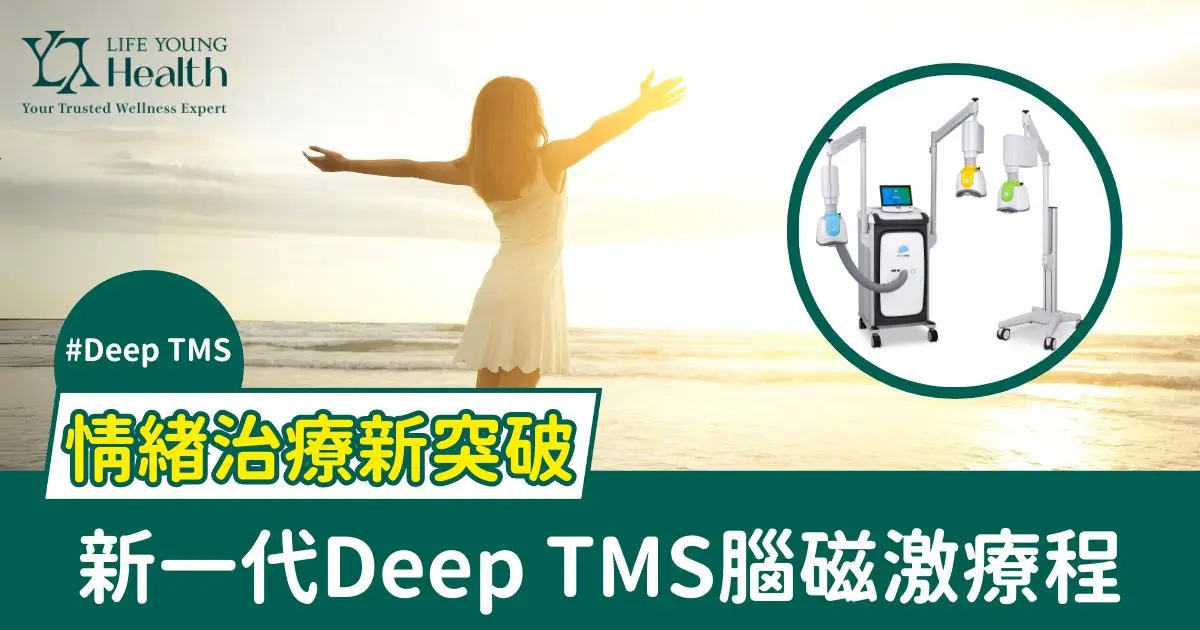
Life Young Health is the first center in Hong Kong to introduce BrainsWay’s latest generation of Deep TMS technology. Using a patented H-coil and three treatment modes tailored to individual emotional symptoms, it can improve insomnia, low mood, depression, and anxiety. The latest generation of Deep TMS reaches deeper and broader areas of the brain. To date, it has been used in over 2.5 million treatment sessions in the United States, helping more than 100,000 patients, and is approved by the U.S. FDA and EU CE. It is used for multiple psychiatric and neurological conditions, providing a proven safety record.


Life Young Health has introduced the latest generation of Deep TMS technology, targeting individual emotional symptoms to improve depression, anxiety, and other mood-related issues.(Image:Shutterstock)


Differences Between Deep TMS and rTMS — New Technology More Effective at Improving Mood

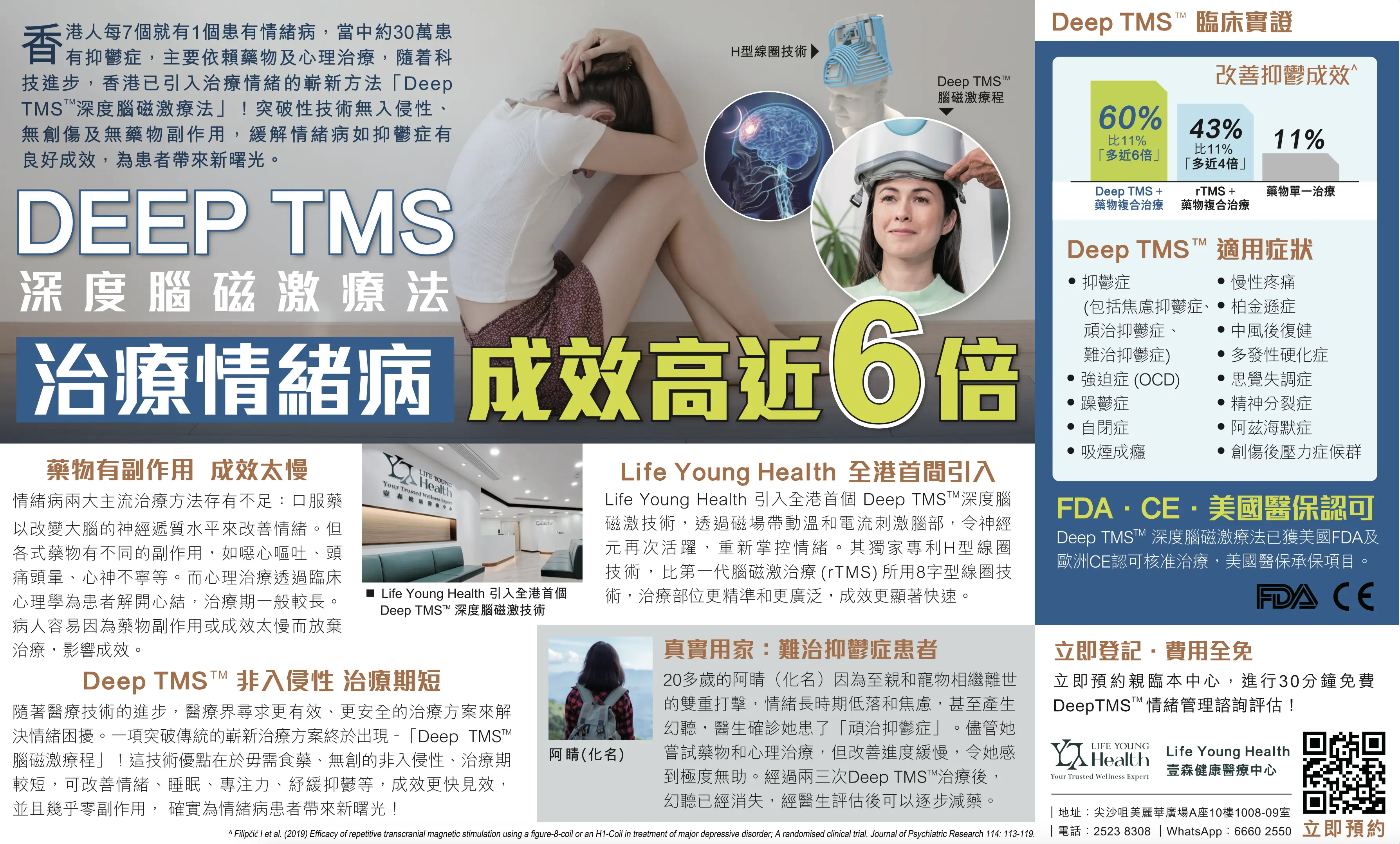
The Hong Kong Hospital Authority currently uses first-generation TMS technology. So what exactly is the difference between traditional TMS and the latest generation Deep TMS? While both are nearly side-effect-free, have no withdrawal symptoms, and require relatively short treatment periods, their effectiveness differs significantly. BrainsWay’s latest generation Deep TMS technology is more effective than traditional TMS systems from other brands. It can stimulate both the cortical and deeper brain regions more broadly, reaching depths of 1.8 to 3.5 cm, with greater accuracy and coverage of treatment targets. The effectiveness in improving emotional disorders rises from 43% with traditional TMS to 60% with Deep TMS, and it also helps improve sleep quality. Clinical evidence shows that two out of every three patients experience significant symptom relief, and 80% of patients with severe depression achieve good responses, demonstrating remarkable efficacy.


DeepTMS vs rTMS


Life Young Health is the first center in Hong Kong to introduce BrainsWay Deep TMS technology, significantly enhancing the effectiveness of emotional disorder treatment—far surpassing results achieved with medication alone—and helping patients get their lives back on track sooner. To learn more about the latest generation of emotional therapy solutions, visit the Life Young Health website for further information.


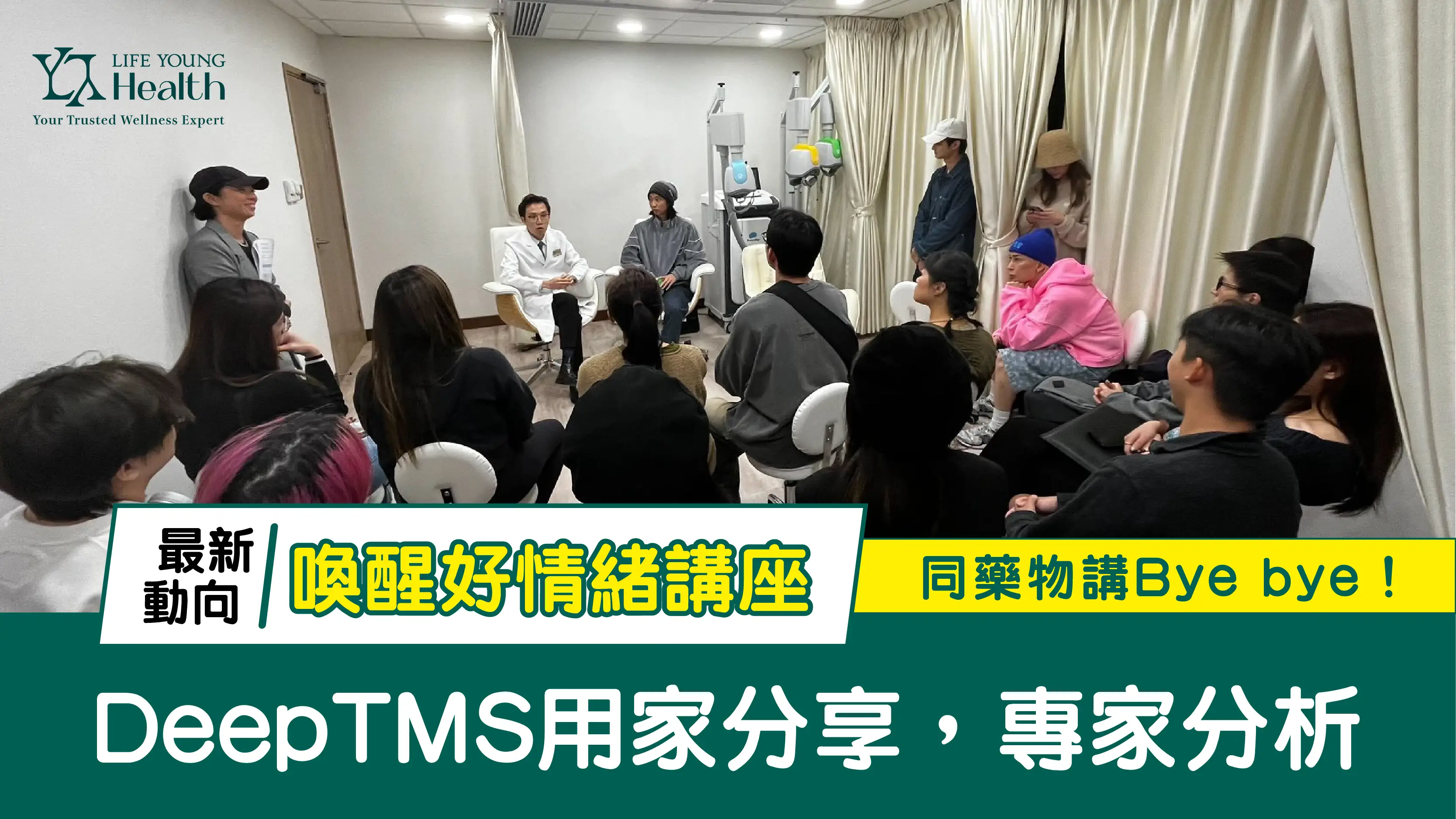
BrainsWay Director Yossi Levental recently visited Hong Kong at the invitation of Life Young Health to personally share the Deep TMS technology and treatment experience.

BrainsWay’s exclusive patented H-coil technology is now introduced by Life Young Health across all three treatment modes, targeting different emotional symptoms such as insomnia, low mood, OCD, depression, anxiety, and nicotine addiction.


Life Young Healthcare Limited

Hong Kong’s First Center to Introduce BrainsWay’s 【Deep TMS™Deep Transcranial Magnetic Stimulation Treatment】

Website:https://bit.ly/49rfeGo

Contact Us:https://bit.ly/47ljl4R

Address:Room 1008-09, 10/F, Tower A, Mira Place, Tsim Sha Tsui, Hong Kong

Phone: 2523 8308 / 6660 2550 (WhatsApp)

Article Source: 全港首間引入Deep TMS技術 刺激大腦皮質治療情緒病 | 香港01 https://www.hk01.com/article/958737?utm_source=01articlecopy&utm_medium=referral

line

Other Articles

line