Revitalize Brain Health in 20 MinutesDeep TMS™Deep Transcranial Magnetic Stimulation

  • About Us

08/12/2025

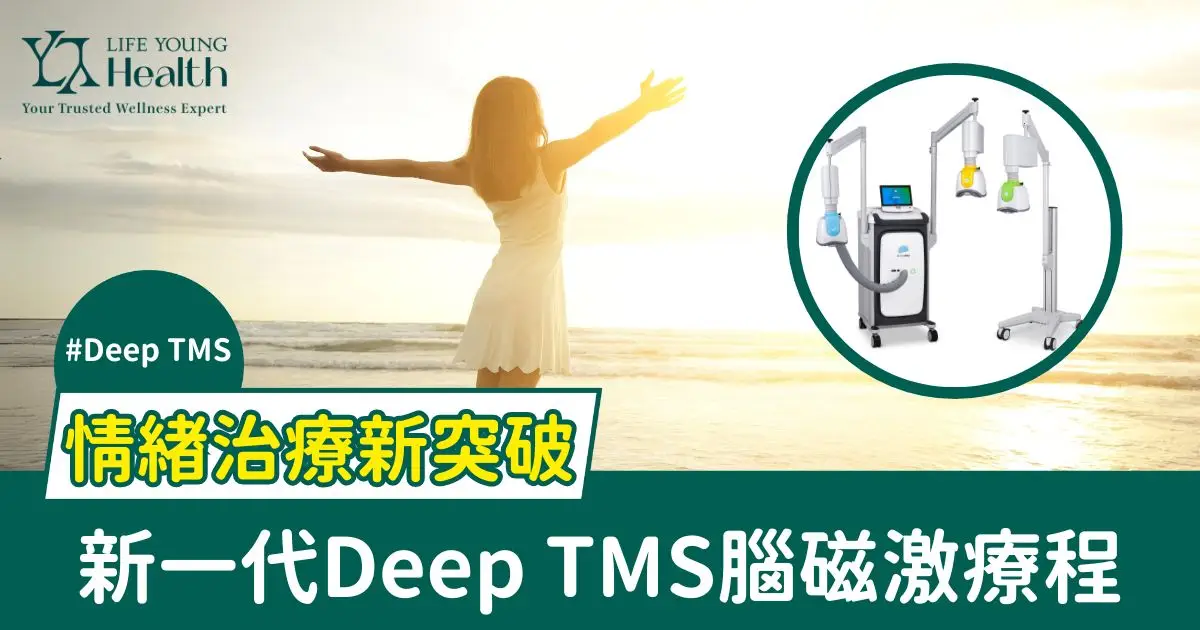
[New Breakthrough in Emotional Treatment] New Generation of Deep TMS Brain Magnetic Stimulation Treatment, Non-invasive and No Drug Side Effects

share to:

facebook whatsapp
events


Insomnia, low mood, and frequent crying may be early signs of emotional disorders

Emotional disorders are becoming a serious trend worldwide, and the number of people affected in Hong Kong is steadily increasing. Reports of adolescent suicides are particularly concerning. Whether triggered by genetics, stress, or other factors, emotional problems can manifest as symptoms such as insomnia, low mood, and irritability. If not addressed appropriately and in a timely manner, these symptoms can severely impact daily life, work, and school performance, and may even worsen into conditions like depression, anxiety, or obsessive-compulsive disorder.


Traditional Methods: Long Treatment, Numerous Side Effects

How many medications have individuals with emotional disorders tried? How many side effects have they endured? Traditional treatments, such as medication or psychological counseling, often involve long treatment periods, high risk of side effects, dependency, and intermittent rebound effects. As a result, they may fail to address the root causes of emotional problems effectively.


Medication Treatment

Includes antidepressants, anti-anxiety medications, and mood stabilizers.

Function:Regulates the balance of chemicals in the brain.

Psychological Counseling

Provided by therapists or psychologists using cognitive-behavioral therapy (CBT).

Function:Helps patients manage emotional issues through consultation and support.


Deep TMS: A Breakthrough in Emotional Health Treatment

With advancements in medical technology, the healthcare field is seeking safer and more effective solutions for emotional distress. A groundbreaking treatment has emerged—Deep TMS™ (Transcranial Magnetic Stimulation) therapy! This technique has several advantages: it requires no medication, is non-invasive, has a shorter treatment period, and can improve mood, sleep, concentration, and alleviate depressive symptoms. Results are typically faster and side effects are minimal, offering a new ray of hope for individuals struggling with emotional disorders.


Is There an “Emotional Control Room” in the Brain?

To understand how Deep TMS™ treats emotional disorders, it’s important to know why these issues occur. Emotional problems are closely linked to degeneration in the prefrontal cortex. Each person’s dorsolateral brain region contains an “emotional control room” — the prefrontal cortex — whose neural circuits regulate emotions, focus, and related functions.


When Brain Function Declines, the “Emotional Control Room” Can Malfunction?

Research shows that patients with depression exhibit significantly weaker metabolic activity in the prefrontal cortex, impairing the brain’s ability to regulate emotions. This dysfunction can cause insomnia, difficulty concentrating, irritability, and low mood. Prolonged stress, persistent low mood, and sleep deprivation further impact brain function, increasing the risk of depression and affecting daily life, including work, school, and social interactions.


Targeting the Root: Regaining Control of the “Emotional Control Room

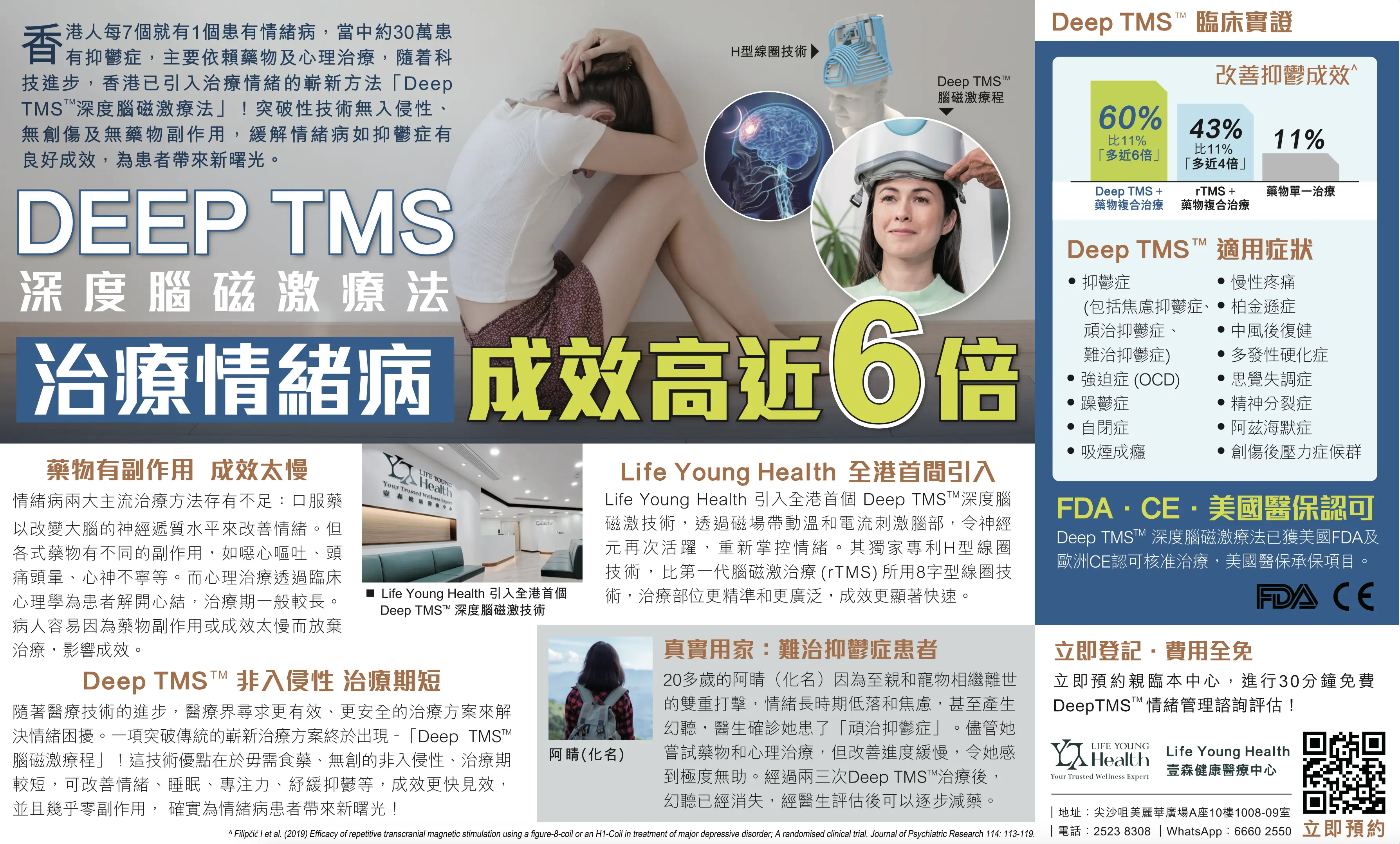
Deep TMS™ (Deep Transcranial Magnetic Stimulation) specifically targets the brain’s emotional center — the prefrontal cortex. By using magnetic fields to stimulate neural regions, it activates the prefrontal cortex, enhancing the brain’s ability to regulate emotions and restore emotional balance. Because the treatment is safe and non-invasive, it has become increasingly popular worldwide. It is especially suitable for individuals who respond poorly to antidepressants, are drug-resistant, or worry about side effects. Deep TMS™ can be used as a standalone treatment or in combination with medication. While the Hong Kong Hospital Authority offers older first-generation TMS treatments, waiting times can be several years.


Is Deep TMS Truly Effective? 

Clinical Evidence


For individuals with severe depression

For individuals with anxiety and depression

For individuals with obsessive-compulsive disorder (OCD)

For individuals struggling with nicotine addiction

80% of users showed a positive response¹, which is 50% more effective than using medication alone.*

40% of users experienced sustained symptom reduction², with improvements lasting at least 16 weeks¹.

Over 70% of users experienced symptom relief³.

30% successfully quit smoking, including long-term smokers (over 26 years) who had previously failed multiple attempts.*


Only 20 Minutes Per Session • Drug-Free • Highly Effective

Deep TMS™ (Deep Transcranial Magnetic Stimulation) has been approved by the U.S. FDA and EU CE for multiple psychiatric and neurological conditions, particularly Major Depressive Disorder (MDD), anxiety-depression, Obsessive-Compulsive Disorder (OCD), and smoking cessation. It is also suitable for most other emotional disorders, offering a safe and effective treatment option. For individuals who have not responded to medication, Deep TMS™ can be combined with drug therapy for a comprehensive approach. For those who prefer to avoid medication or have mild emotional issues, such as insomnia or heightened stress, Deep TMS™ can help alleviate emotional distress. In the U.S., over 100,000 patients have undergone more than 2.5 million treatment sessions.*


Comparison Between Deep TMS™ and Traditional First-Generation TMS

Deep TMS™ is developed by BrainsWay® and utilizes a patented “H-coil” design. It offers three modes tailored to different emotional symptoms, including insomnia, low mood, OCD, depression, anxiety, and nicotine addiction. Compared to traditional TMS, Deep TMS™ provides a deeper and broader magnetic field coverage of the brain, resulting in more significant and effective treatment outcomes. 


Fast   

Fast: Highly efficient, each Deep TMS™ session lasts just 20 minutes (for severe depression, the FDA-standard protocol is 5 sessions per week for 4–6 weeks#).

Powerful   

Powerful: Reaches deeper than first-generation TMS, penetrating up to 3.5 mm beneath the scalp.

Precise   

Precise: The patented H-coil technology covers a wider treatment area, delivering more effective results.

#Please note that the duration and frequency of each treatment session may vary depending on the individual’s condition and symptoms, and the overall effectiveness may differ from person to person.


What does a Deep TMSTM session feel like?

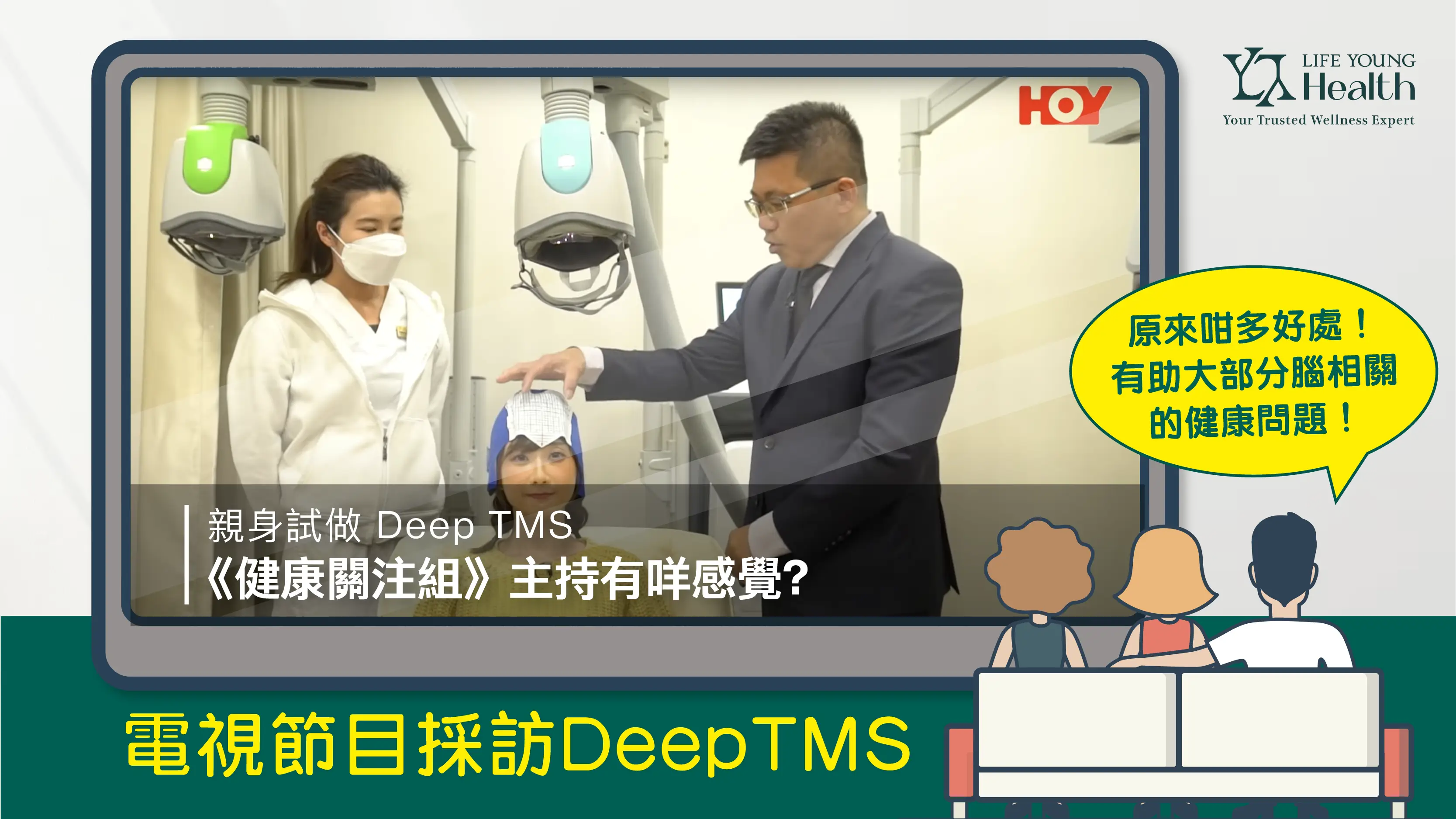
The entire treatment requires no anesthesia, and users remain fully conscious throughout. During the session, you may feel gentle intermittent tapping from the device on your head, along with a slight tingling or twitching sensation in the scalp muscles. Once accustomed to the procedure, users can close their eyes to rest or use their phones. After the session, you can immediately resume daily activities, including driving, working, or attending school, without any restrictions.


Where can you undergo Deep TMSTM treatment?

Currently, Life Young Health is the first and only medical center in Hong Kong to introduce the BrainsWay®️ Deep TMSTM technology.


Life Young Health 4 Key Advantages

  • First to Introduce: The very first in Hong Kong to introduce BrainsWay®️ Deep TMSTM next-generation technology.

  • Medical Team: Led by experienced doctors with skilled nurses monitoring each session.

  • High Privacy: Treatments can begin immediately after a medical assessment, allowing you to enjoy dedicated “Me Time.”

  • Healing Environment: Comfortable chairs, soothing music, and herbal tea create a relaxing space to support emotional well-being.


Through this innovative technology, the Deep TMSTM deep transcranial magnetic stimulation treatment offers new hope for individuals with emotional disorders, improving quality of life and enhancing the effectiveness of treatment. This therapy can be used on its own or combined with other treatment methods, proving far more effective than relying solely on medication, and helping individuals get their lives back on track sooner.


To learn more about this next-generation emotional therapy, visit Life Young Health or WhatsApp 66602550 for inquiries.


———————————————————————————————————

1 Efficacy and safety of deep transcranial magnetic stimulation for major depression: a prospective multicenter randomized controlled trial. World Psychiatry Vol.14. 2015|2 Efficacy of Deep TMS with the H1 Coil for Anxious Depression. J. Clin. Med.2022,11,1015|3 《Journal Of Psychiatric Research》 indicates that, on average, 72.6% of patients began to achieve their first remission after completing 18.5 Deep TMS sessions. | *Data and statistics provided by the manufacturer.

line

Other Articles

line